A number of Japanese Wadokei have apertures in their front plate to indicate the date. They have rotating toothed and engraved disc(s) behind the aperture(s). Date aperture(s) are probably adaptations of European clocks that showed 1 to 31 days in a month. The discs are normally driven by a single peg in the day going dial on the front of the clock.
Single Aperture
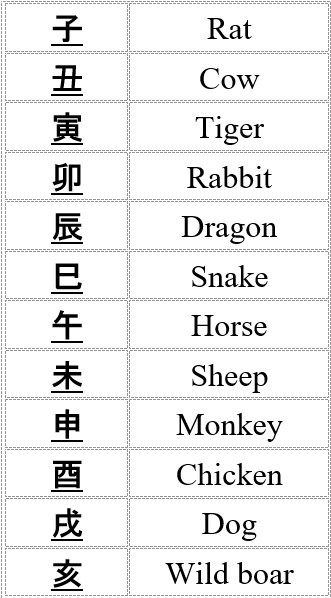
Wadokei with a single aperture normally show the twelve Terrestrial Stems of the Zodiac and repeat five times in a 60 day month.
This is the simplest form of naming the days. Some days were Lucky Days, and it was on these days that contracts would be signed and long-term purchases of equipment or works of art would be sold. Or, a day for buying a Wadokei!!
Double Apertures
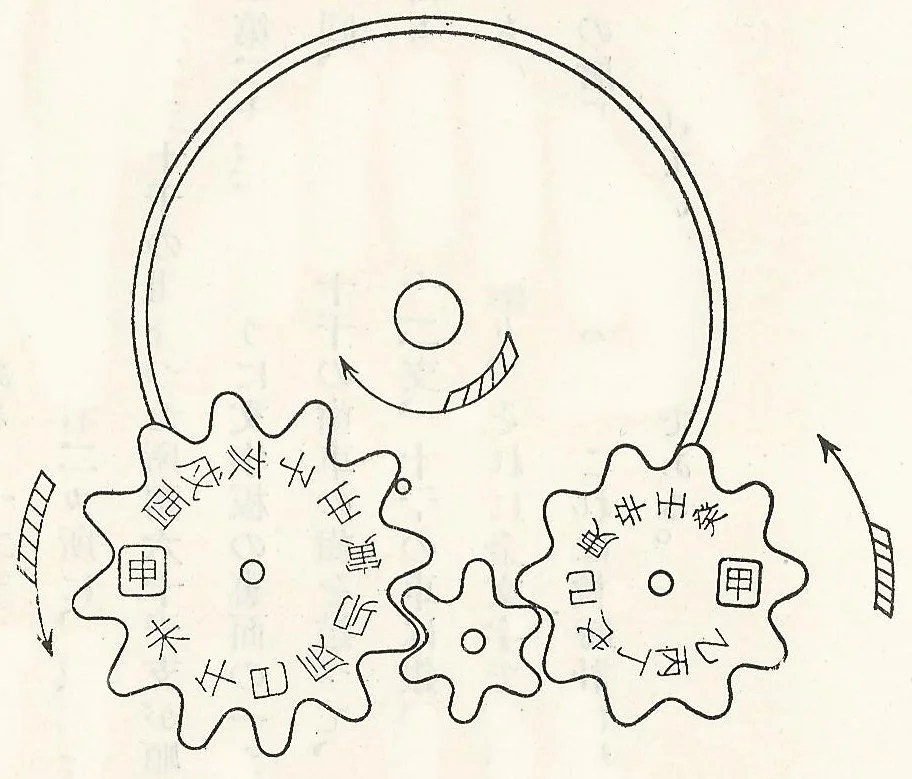
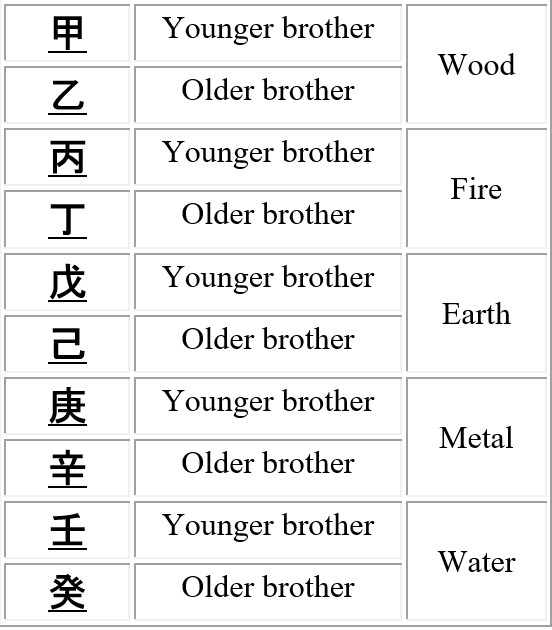
Other Japanese clocks have double date apertures where the second aperture shows the ten Celestial Stems of the Zodiac. This second Celestial disc is geared to the Terrestial disc. Whilst the repeat of the Terrestial Stem repeats five times in the 60 day month, each of the 12 Terrestial Stems is paired with a different Celestial Stem.
High-Tide Time Indication Apertures
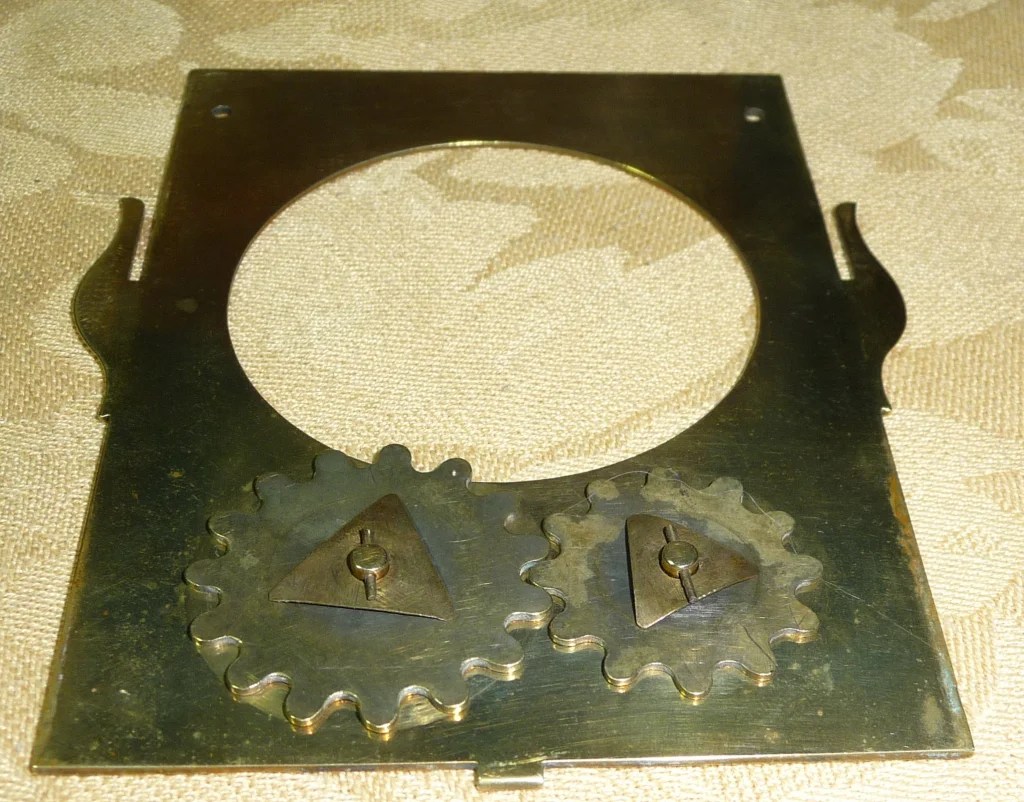
One of the Wadokei in my collection has double apertures that provide the time of high tide on a 15 day cycle. One aperture has a 15 tooth disk, the other a 12 (not 10) tooth disk.
The right hand aperture indicates days in a numbered 15 day cycle with one or two kanji characters (1-10 in single characters, and 11 to 15 in two characters).
The left hand aperture indicates the time of day in a pair of two kanji characters indicating the time of high-tide each day in hours and “bun” (Edo Period 1/10 of an hour).
With two high tides a day, and with a lunar month being 30 days (29.53 actual), the time of high-tides repeats every 15 days.
In Shinto religious practices, some of which still survive today, there was a belief that certain ceremonies should be performed when the tide is coming in (flood tide), as opposed to when the tide is ebbing, which was seen as a negative period of time. Ceremonies in which the state of the tide is considered are (i) naming a child on its birthdate, (ii) giving a child symbolic gifts at its first birthday, (iii) the marriage ceremony of san san-kudo, and (iv) the moving of a younger son, on his marriage, from the main house of his father to his own house. There were many other occasions when a flood tide was important, for example, the instance in which the boar is allowed when the sow is in heat !!
 Sharing My Passion for Wadokei - Home Page