It has been stated by several Japanese Wadokei specialists over the last 100 years that the demise of the number of Wadokei in Japan is the result of purchases made by foreigners. As a former member and director of the British Horological Institute, and having given eighteen talks on Wadokei across the UK over the last 10 years, I am convinced that very few Wadokei are in the UK – excepting those in the British Museum, London. Further, I believe that there are only a few in Europe.
Since I launched this website seven years ago, I have received around 30 queries from clock enthusiasts in the USA seeking assistance on elements of Wadokei – and only one from Europe. It is my assumption therefore, that most of the ex-Japan Wadokei are in the USA.
Wadokei Collections in the UK
John Drummond Robertson 1857-1934
I have conducted exntsive research on this Wadokei Collector for several reasons:
- His book “The Evolution of Clockwork with a Special Section on Japanese Clocks”, is a “go-to” reference for everyone interested in Wadokei
- I have been able to examine examine his collection first hand (see below)
- I have also undertaken a transcription of his personal 100 page Notebook on his Wadokei Collection as a volunteer at the British Museum where it is held.
- He was a Scotsman – like myself
- And, most significantly, in early 2023 I stripped, cleaned and restored to operation the most prized Wadokei in his collection on behalf of his great-granddaughter in Edinburgh, Scotland.
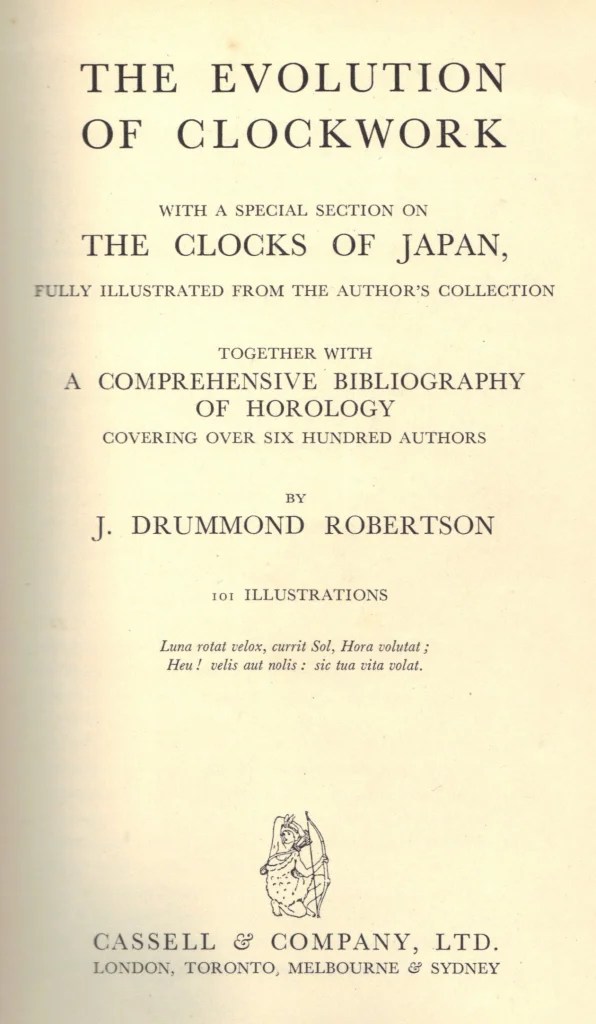
John Drummond Robertson’s first Wadokei was a gift from Japan when he was aged 50. Ten years later he started collecting fom English Auction Houses and fellow Clock Collectors, in particular, buying 18 Wadokei from Pery Webster, the Master of the Worshipful Company of Clockmakers, London, plus, over 22 Wadokei from Mathieu Planchon, a famous Parisian Clockmaker.
In total John Drummond Robertson personally collected approximately 80 Wadokei, many illustrated in his book.
On his death in 1934 he bequether almost all of his Wadokei to Courtenay Adrian Ilbert.
Courtney Adrian Ilbert 1888-1956
Courtenay Ilbert started collecting clocks and watches when he was at school. He collected widely and built up one of the most comprehensive collections in the world, covering almost every aspect of the history and development of horology. He was an authority on antiquarian horology, as well as a Liveryman of the Worshipful Company of Clockmakers, plus a Fellow of the British Horological Institute and one of the founders of the Antiquarian Horological Society – with the founding meeting held in the Dining Room of his London home.
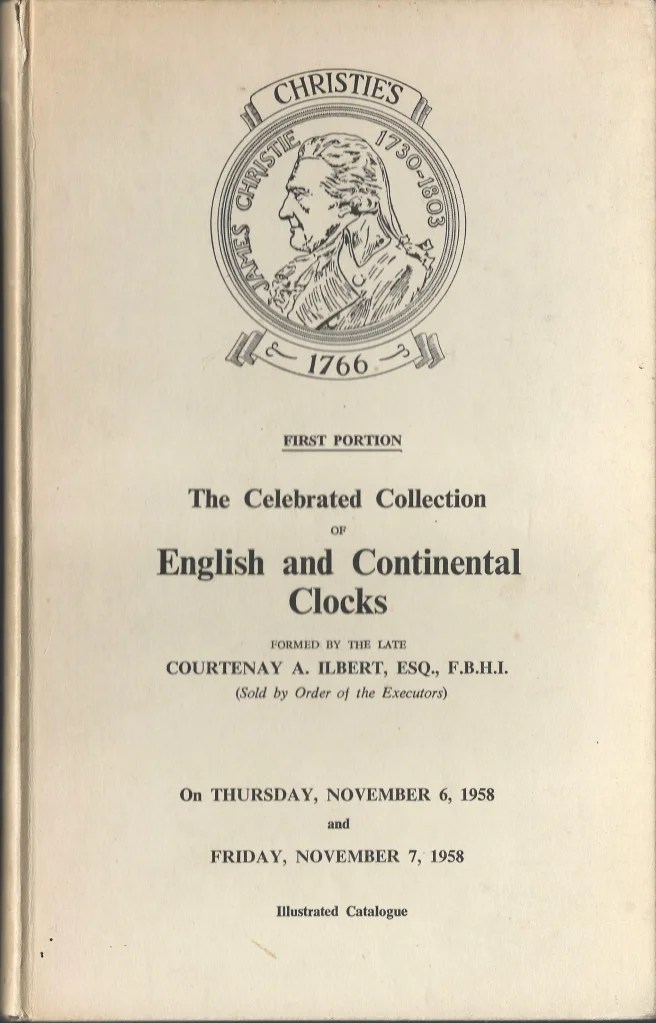
When Courtenay Ilbert died, his family sought Christie’s Auction House to sell-off his extensive horological collection. The two-day auction had 227 lots of English, French, German and Miscellaneous Clocks – many containing several clocks. There were 58 lots of Japanese clocks containing 72 individual Wadokei, with 67 accredited to John Drummond Robertson.
However, the Auction did not materialise. Gilbert Edgar, Chairman of the extensive UK Watch and Jewellery retailers, H Samuel, arranged for the entiore collection to be purchased for the Nation, with the Clocks and Wadokei entrusted to the British Museum, and the Library to the British Horological Institute.
British Museum, London
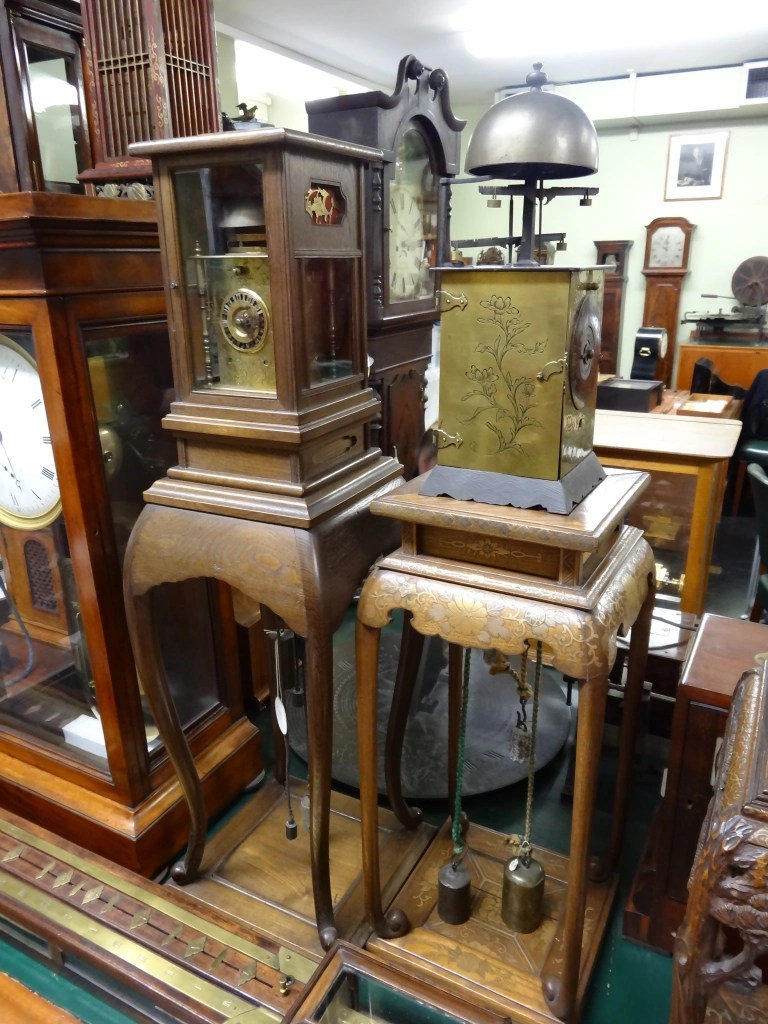
The British Museum displays several Wadokei in its permanent Japanese Room. It rotates these Wadokei with the many housed on-site in its Students’ Room for Authorised Personnel in its basement. Visitors wishing to access the Students Room require to make prior application.
John Read Collection
In 1954, John Read, an English horologist, was appointed by Rolex Watches, Switzerland, to be their Managing Director for the Far East and Australia. He was based in Tokyo through to 1980. He was a Fellow of the British Horological Institute and also their Past Chairman. He also had Geneva and Swiss Federal Diplomas.
Over his 25 years working in Tokyo he not only assimilated an extensive knowledge of Wadokei, but also assimilated an extensive collection of Wadokei and related Ephemera. When he retired back to England, he brought his private collection of Wadokei with him.
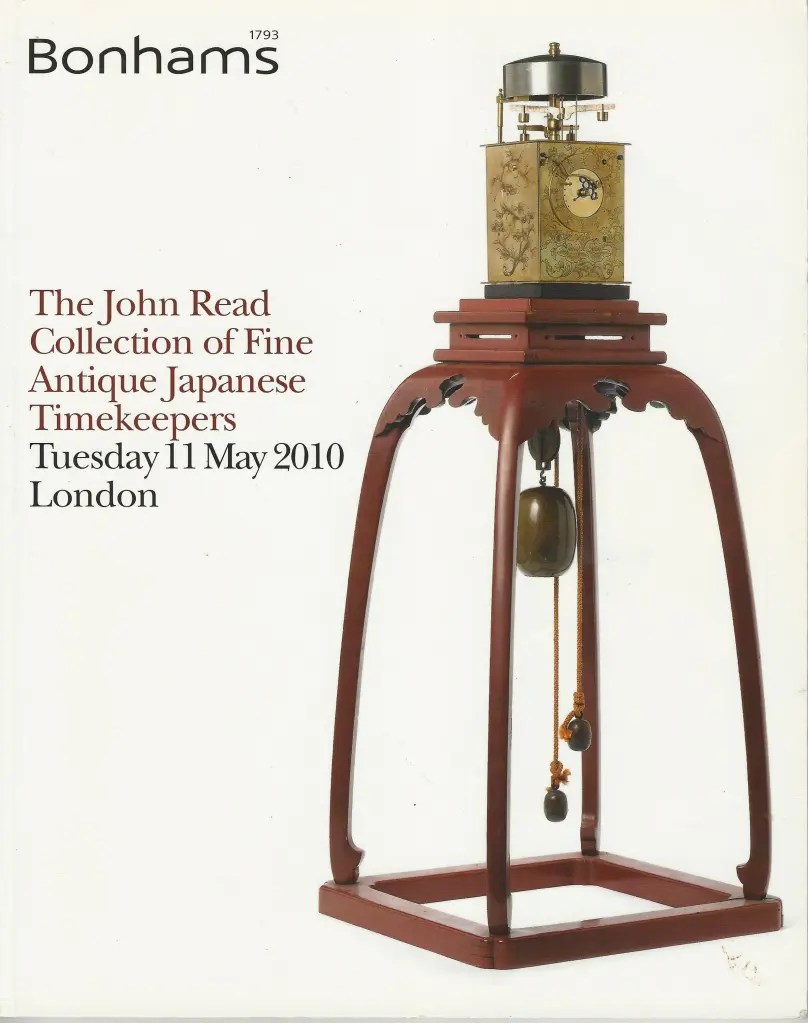
However, when he later moved to Exeter, in South West England, most of his collection was sold by auction by Bonhams on 11 May 2010. The auction contained 147 lots, some including more than one item. The Auction included approximately:
- 6 Yagura-dokei
- 7 Dai-dokei
- 9 Hashira-dokei
- 21 Shaku-dokei
- 8 Makura-dokei
- 1 Kane-dokei
- 10 Inro-dokei
- 3 Pocket Watches
- 41 Sundials
- 4 othe Wadokei
- plus many Ukiyo-e prints featuring Wadokei
 Sharing My Passion for Wadokei - Home Page